In Search of the Deep Back Line: DBL Vol. I

Author’s note: The following story is true, but as many names as possible have been omitted, altered, or abridged to protect the brave truth-tellers who came before me.


 As we arrive on the scene, downtown Northampton, Massachusetts, where there are more bodyworkers than there are baristas… where you can’t throw a yoga instructor without hitting at least a dozen massage therapists… one must be careful when speaking about the coveted Deep Back Line.

It's reminiscent of the time we were road-tripping in the South and tincturing herbs along the way… somewhere in Nowheresville, West Virginia, I made the mistake of asking where I could get grain alcohol in a local diner. You know, y’all from around here? Iced tea? Sweet or unsweet? Need any directions or anything? “Yeah, do you know where to get grain alcohol?” Y’all best be … turns to look, and the entire place is so quiet you could hear a pin drop. Folks around here don’t take too kindly to outsiders asking such questions… “No… I meant for medicine making…”

Talking about the Deep Back Line (DBL) without reading the room gets a similar reaction. The DBL gets only whispers, in dark corners… when the practitioner makes sure no one is listening…

I stroll into a local coffeehouse, and I begin unpacking my rucksack. Armed with anatomy books and notebooks from the past few years of research, class notes, and printouts of articles with my chicken scratch and highlighter marks all over them… a string of strange phenomena is already afoot.

My usual order was mysteriously 86’d from the menu at the Woodstar Café. They had just run out… however, the counter helper (mysteriously wearing an earpiece) was able to order all the ingredients separately. Odd. No bother.

I found my usual chair and began assembling my workstation. That’s when I noticed my typewriter was frozen.

This is the device I prefer for writing my humble articles — frozen. I tried powering it off and back on. Still frozen. I tried the secret reset… hold for 15, 30, one minute… nothing.

Okay, it's technically a hybrid between a word processor and a computer… it has a screen like that of an e-reader, connects to the internet to share my writings to my drive, but cannot access any distractions. No spelling or grammar check. Editing is nearly impossible, and that’s by design. No web browsing, no social media, and certainly no doom-scrolling. It only toggles between documents, and the lever to do so looks like something out of a retro-futuristic control panel. It's perfect… just the right amount of tech, and the battery lasts forever.

Except for today.

As I go to finally write down the hidden knowledge I have uncovered about this sacred and secret myofascial meridian… my typewriter is frozen. Not out of battery. Just. Frozen.

I adapt… moving to pen and paper. I pull out my sketchpad and begin writing, “In Search of the Deep Back Line,” when suddenly my headphones die with very little warning.

“Recharge headset,” she said, in an English accent… or the accent I imagine a British robot might have. Those were her last words.

Suddenly, the already loud coffeehouse was filled with the white noise and flutes I was blaring to drown it out. It jumped right from headphones to cellphone speaker. Now I am only adding to the chaos. I quickly hit the volume down several times… opened the phone… closed the apps… okay.

I muddle through. I reach for my keychain, which hides a metal, waterproof, screw-top vial, and within it, my earplugs. I plug my ears and continue…

Before long, my pen runs out of ink. Luckily, it's one of those fat multicolored pens. I click the next best thing to black and carry on.

“Keep calm and carry on,” I imagine my British headset robot saying.

Meanwhile, my sandwich is called.

“Feeven,” someone at the counter calls out. “Order for Feeven.”

I had ordered under my name — “Steven… with a ph” — and… yeah… the sandwich was assembled… but in a to-go bag.

No bother. I only eat half at once anyway and save the rest for later.

But the barista apparently didn’t get the memo that I was writing sensitive materials. That I was blaspheming as we speak.

No — my mocha was served in a nice ceramic cup with a dollop of homemade whipped cream — just like I like it.

And as a bonus, whoever these silencers of the truth were, they didn’t know who I was… because they can’t even spell my name.

I sat back down and continued writing…

There is a mystery that has been plaguing bodyworkers for some time, ‘Does the Deep Back Line Exist?’ I think, at the most fundamental level, it has more to do with our need for symmetry and pairs in our anatomy — particularly in our nomenclature and naming schemes.

When it comes to muscles, for example, if a muscle’s name contains the word profundus, it means it is located deep to a similar muscle, which will then get the title of superficialis. So the extensor digitorum superficialis will be located on top of, or superficial to, the extensor digitorum profundus. Also, there are pairs like longus and brevis. So, sticking with the extensors, if we have an extensor digitorum longus, you will have an extensor digitorum brevis. Longus means… well… long. And brevis means short. Or, as I like to say, “That short king is short but brave!” And it's not just muscles we find these pairings in…

The nervous system gets in versus out, voluntary versus involuntary. The circulatory system gets away from and toward the heart. The lungs get big branches versus little ones. The digestive tract gets wider versus narrower. Even in the basics—day-one directional terminology—we get: anterior/posterior, medial/lateral, superior/inferior, etc.

So, when it comes to myofascial continuities, you can see we’re already used to thinking this way. These paired relationships are expected.

It was circa 2008, and we had an influx of students during the economic recession, some of whom were studying athletic training, strength training, and conditioning at a local four-year college down the street from the massage program I was teaching in. It was an exciting time… I not only suddenly had much larger classes than I had over the past few years, but the majority of the program was enthusiastic about going deeper and learning more. They challenged each other to want to do better. And when they got to my muscles-and-bones class… they really let me guide them into some fun territory.

I like to explore concepts, get creative, dive deep, find connections — make learning not only challenging but fun. I like to weave in concepts outside of the basics. In this case, instead of just thinking about muscles as having two types of attachment and one type of action… I like to think about what this muscle does when it's elongated and still contracting… how does it hold posture? Think of the whole personality of a muscle, not just what’s on its driver’s license… but what’s on its social media profile page! There’s just so much more to think about with a muscle and its relationships…

Armed with a few texts that had me thinking outside this box — Endless Web, a text written by some traditional osteopaths who were also Rolfers™ — I got my first glimpse of myofascial continuities: that is, muscles not ending at the insertion and not beginning at the origin, but functioning in a longer line of sorts.

There was another text, one aimed a bit more toward athletic trainers — “Manual of Structural Kinesiology.” I had ordered it for its wonderful charts on innervations (which nerve plugs into which muscle). I found this page that had an image of all of the muscles attached to the scapula and how they turn it. It was the first time I had seen a diagram like that. So simple.

It was around midterms. We had just finished the muscles of the upper extremity, and I created a group project, disguised as a game, that counted toward their midterm grade — and it was cooperative. Those who were participating and engaged got an A, which counted for half of their midterm! Even if they were wrong. If they could articulate what they were thinking, that was it.

What was the game? Take the scapula as the center point. Now tell me every muscle it attaches to, and therefore every bone it connects to via those muscles. I drew a skeleton on the board. The students had to draw each muscle they agreed on and attach it from the scapula to its other bones. These muscles were colored red (for those attached directly to the scapula). Name the muscle, explain its function at the scapula (in the simplest terms), and make sure you got all of its attachments right.

Now go back to those non-scapular attachments. If another muscle picked up from there… let's add it in (these were in blue) and try to explain a rationale for how they “functioned” together.

Essentially, I combined the concepts in two books… remember this wasn’t about getting it right or getting a textbook answer — this was for getting our minds thinking about myofascial chains.

We found a few interesting connections like this, following my oversimplified mnemonic of “bone–tendon–muscle–tendon [–bone]” (say that out loud and repeat… it’s the baseline of an anatomy song).

Within a day or two, a student from a different class caught me in the hallway. He had seen our project left on the board from the day before, and he couldn’t believe I had never heard of Anatomy Trains. I figured it was some kind of YouTube Crash Course thing… then he showed me a binder where he had printed off the entire book that would become my new bible… or perhaps the New Testament to the Trail Guide. I needed it. I had to have it.

So he got me a thumb drive of the PDF that had been circulating around his strength training and conditioning program. Sorry, Tom, but I found you via bootleg! Hopefully, becoming your devotee has made up for all the piracy.

It was in reading an illegal copy of Anatomy Trains that I began to realize that the myofascial connections to the scapula didn’t stop at the pelvis or the neck… but went all the way to the foot and to the head. What? I was astounded!

I read that book like I read the KJV growing up. By which I mean, I felt compelled by a power greater than myself to read it cover to cover in both a state of ecstasy — for I knew there was some sacred truth in there — and also bewilderment, for much of that truth went right over my mortal head.

Finally, I convinced the publisher to send me a “desk copy.” That’s teacher code for a free book. They were quite reluctant. There was a time when I could justify almost any anatomy, science, ethics, or massage book under the secret code of “desk copy.” But this sacred text was a bit more coveted than others. I had to justify my status and clearly articulate the class I was pitching it for and who I was pitching it to.

Not a problem. I knew I wasn’t lying. I was about to take that girl to curriculum review and force everyone to read it. At least as a supplement. At least look at the pictures!

While I was teaching an East Asian Bodywork class, we were looking at the acupressure pathways (meridians), and I was just about to hand out photocopies of the Sinew Channels when someone said I had a package on the clinic desk. On break, I unboxed it, and it was as if a golden light beamed from inside my cardboard Ark of the Covenant… there it was, in all its glory: the sacred text, most holy of holies — I had finally received my own legal (if still free) copy of Anatomy Trains, 2nd edition.

I flipped through it, and to my surprise, there was an appendix dedicated to the similarities between myofascial continuities and the main twelve acupuncture channels (Ordinary Vessels). But… and admittedly I don’t know why it didn’t click before… I HAD seen this all before. The sinew channels and the myofascial continuities — they bore a huge resemblance.

I photocopied each line and returned to class. Now I was armed with two sets of handouts: sinew channels from thousands of years ago and myofascial meridians from modern fascial research. “Okay, kids, let’s see if we can match these lines to the channels we’re studying…”

The Bladder Channel, the Bladder Sinew Channel, and the Superficial Back Line were the most obvious. But my students were determined. I had a cheat sheet; they didn’t. They had unlabeled photocopies to place in categories: Bladder Channel, Kidney Channel, Gallbladder, Liver, etc. They debated, mixed and matched, got out atlases from Netter’s Atlas to the Seirin Pictorial. Eventually, they declared they were done.

I gave them the Deadman book and my new treasure, and they were really accurate — scarily accurate. Once we made final arrangements and labeled the handouts, those handouts went straight into their binders. Then we palpated the meridians with newfound curiosity.

The conclusion was that the channels are inside the myofascia. Or, as one student put it, “the myofascia is inside the human energy system, closely related to the channels.”

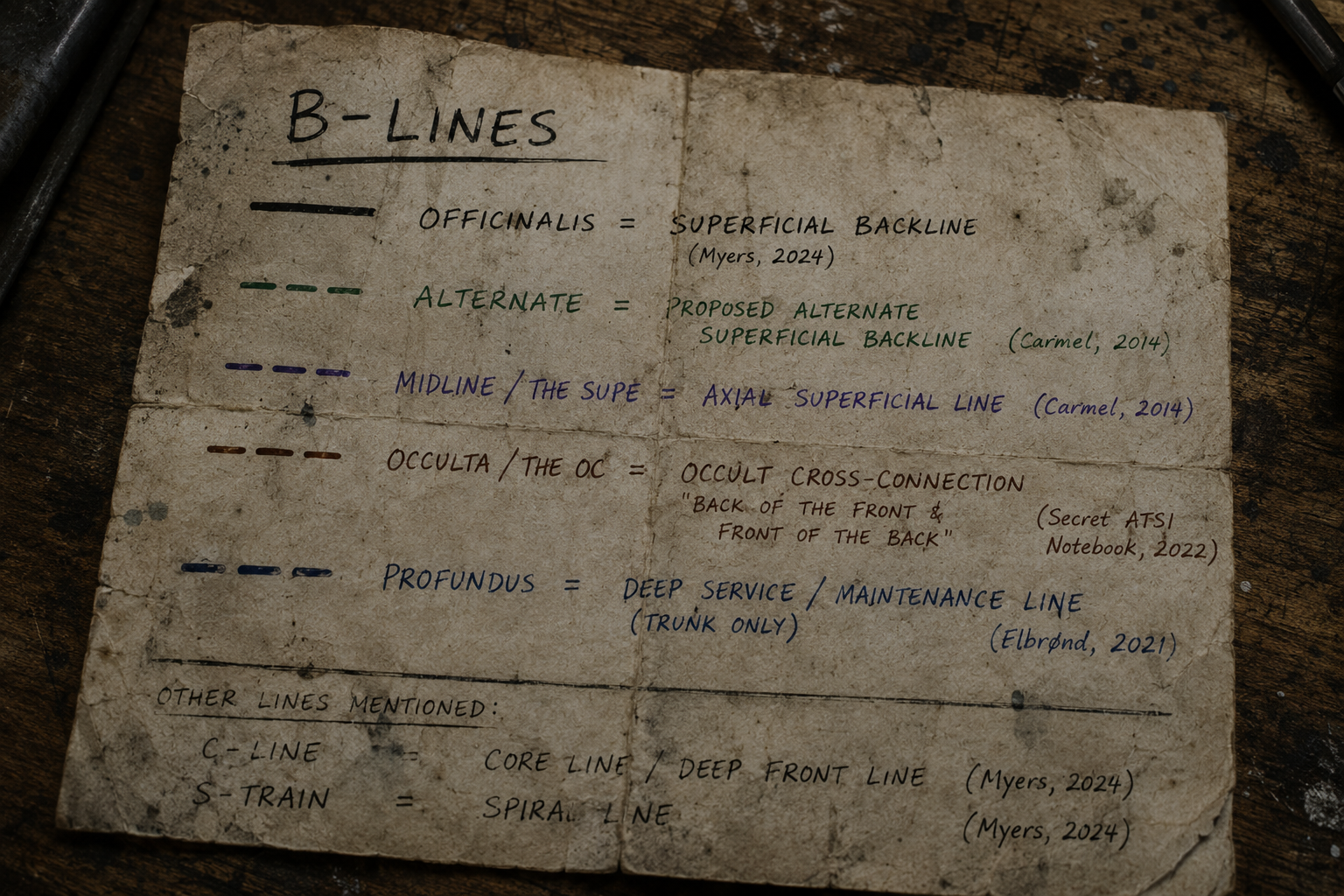
It was also in that class that we started noticing something missing. Where there’s a yin organ, there’s a yang. Where there’s a superficial, there’s a deep. A front and a back. Everything is in pairs. There are Superficial Front Arm Line (SFAL) and Superficial Back Arm Lines (SBAL). There’s a Deep Back Arm Line (DBAL) and a Deep Front Arm Line (DFL). On the torso, there’s a right Lateral Line and a left Lateral Line. There’s a superficial front line and a Deep Front Line. But with the back line… There was only a Superficial Back Line. Not a deep.

Maybe the front and the back lines were the superficial pairs, and the core was its own thing… and the naming scheme was just a bit off.

By now, I had incorporated these materials into my muscles and bones class as well as my East Asian Bodywork class. And just under the surface, this question was always stirring: am I just caught up in a name, or am I missing a line? Where would you even put a deep back line?

Many moons later, I finally got to join my first Anatomy Trains course. No mention of the Deep Back Line. I asked. It didn’t exist.

A few more years passed, and I took the same course again… this time with Tom Myers himself. I had more pressing questions and had let it go.

Then, I was so inspired by the course, and the world was all but shut down, that I went up to Maine and took the whole Structural Integration training at Tom’s school.

And… over a thousand hours in… they let their devotees in on the secret.

The Deep Back Line.

WHAT?

Here I am, prepping for class, books open, laptop open… watching the pre-game video they sent out. The Deep Back Line. My hands trembled. I opened my notebook to the next chapter — The Deep Back Line. My body shook. It was real. It did exist.

The Deep Back Line.

Record scratch.

Oh. They’re saying it's just a conceptual framework… there isn’t really a real line… just the nickname for a session.

Then Tom said something interesting. He had a teacher, “Mr. Y.,” who was convinced it existed.

Y’all — this was on our homework pre-class video!

When I got to class the next week, one of my teachers was THE Mr. Y., the guy Tom had just mentioned, who was a true believer in the Sacred Order of the DBL.

That week, our course covered the territory of ATSI Session 9, a.k.a. the Deep Back Line. The very line that didn’t exist… but we had half a week dedicated to it? You must be joking.

I finally got Mr. Y. alone. I let him know I’d pay the tithe, blood sacrifice, or anything to know the Truth… but he wouldn’t budge. He didn’t want to deviate from the program.

I tried Ms. K., one of the unsung heroes of the ATSI program — she’s basically the school’s mom. She liked me. She would tell me.

Her truth, what she said, was: “It’s the front of the back and the back of the front.”

I pressed further. What kind of esoteric sleight of hand is that?

But she was steadfast. In her mind, it was that in-between space, those fascial coverings where the DBL and the SBL met — the differentiation between those — touching down to them, engaging, or even “evoking,” the core.

That was the Deep Back Line.

And I began to believe in Ms. K’s Line.

It was real. It had some weight to it.

After all… when we opened the seam to greet Tom, Dick, and Harry [See Tom just wanted a coffee], we evoked something within ourselves and our clients. When Mr. Y. taught me how to reach under the hamstrings, in between the hams and the adductors… it was powerful.

At one point, more confident than before, I asked Mr. Y. again, and this time he simply said he had written an article on the DBL in the Journal of Structural Integration. If I wanted to read that, he’d be willing to talk to me about it — but outside of class.

Mr. Y. wrote and published a paper on his findings of the DBL, in a prestigious journal, and wasn’t banished from the program? How was this even possible?

I scoured the internet that night. Sent it to print at my Airbnb. Made three copies for my study buddies (now known as the Equinox Crew… not because we were a cult, but because we rode around in a Chevy Equinox). And I studied.

Now I had two Deep Back Lines.

DBL 1: The front of the back and the back of the front. So, I needed to map the front of the muscles of the Superficial Back Line (SBL), and I needed to map the back of the muscles of the Deep Front Line (DFL). In addition, as I was learning in class, there were some structures that I had been including in the SBL that were “more so” located in the territory of the Deep Back Line session. So that’s going in the pot.

DBL 2: The “proposed” DBL that got a whole article in a journal, which I held in my hands. Map, study, etc.

Just when I thought I had enough confusion to work with… I got Tom.

I think it was in one of the breakout sessions that we called “Salon.” In there, I asked if he could illuminate things any further.

We had his PowerPoint lecture, the pre-game. We had a week of class where we discussed a session dedicated to it. I had this article by one of his teachers, and I had another teacher’s words — “front of the back and back of the front.” We worked on it with each other. We worked it on outside clients. And…

I don’t know if you know this about Tom Myers, but if he sees you’re truly interested — even if it's off-topic or a bit weird — if there is time and space, he will indulge.

And instead of confirming DBL 1 or DBL 2, he acknowledged that both of them had some merit and then quickly moved on to talk about a craniosacral practitioner who had their own DBL?!

And because this was in a semi-private setting, and my mind was freakin’ blown, I honestly could not tell you whether I had notes or whether my Dictaphone was running. I have hours and hours still to transcribe.

But with a few web searches and some time, I found that craniosacral analysis of the DBL… and it's basically the fascia associated with the craniosacral system (think more Upledger than Biodynamic)… but with a few additional myofascial whatnots thrown in for good measure.

As I was about reveal the great mystery of the Deep Back Line, put ink to paper and finally map it out in its entirety – I noticed a group of menacing-looking Pilates instructors headed in my general direction. I quickly packed up my belongings and headed out the back door.

Joke’s on you — my sandwich was already in a to-go bag!

Rivers of energy reflected in the fascia

Her reflections are all around us…
I see her in the spaces between, sinew.
I see her in the outcroppings of plexus, gland, septa, and diaphragm.
I see her in the branches, autumn taken down her lungs leaves.
I see her in the tangled roots.
Why is the path of least resistance so winding?

Magnetically, she pulls others towards her -
or is that aspects of herself towards herself?

Who was that ancient yogi,
who could not see her once the spirit had left the body?
What did he think he would see?

Why do we look for such mechanistic structures,
when the truth is so obvious - if we close our eyes?
The birth of a religion the death of another…


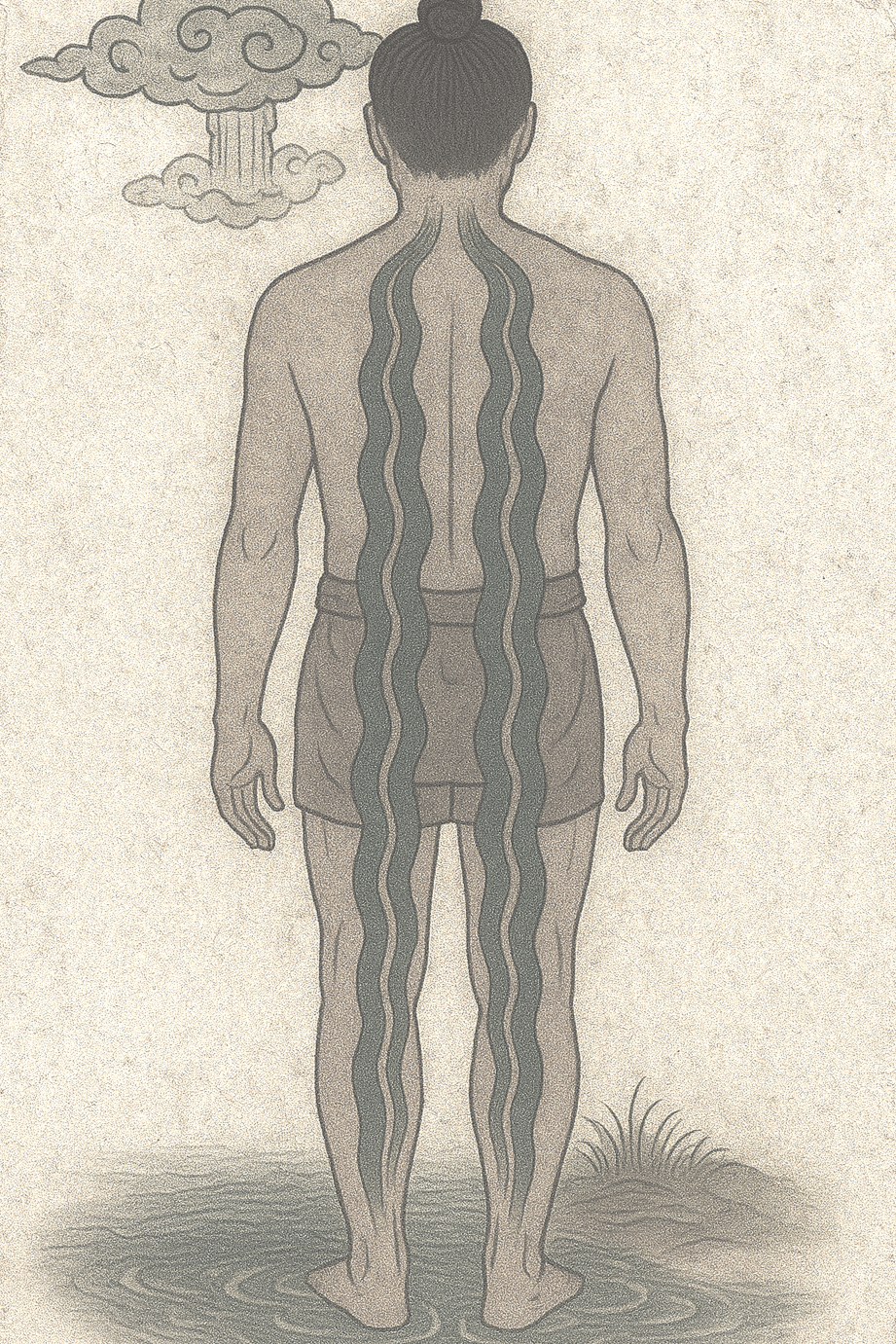
posterior view of human with a river where the bladder channel is said to be

A few years ago, I cobbled together an article sparked by a student's inquiry about chakras. He asked how I understood them, without subscribing to the notion that they were physical anatomical structures. Since then, many have posed similar questions regarding acupressure channels.

Every so often, we get entries in the trade journals about new scientific discoveries that hint at the existence of energy channels, commonly referred to as meridians. Each time, there is an attempt to correlate them directly with anatomical structures. Some have even suggested that these meridians represent a primitive map of the nervous system. However, I believe we are looking in the wrong place. While anatomical correspondences do exist, they are not direct correlations, nor are they synonyms for the meridians themselves.

Consider this: when a vine entwines around a tree, we do not confuse the tree with the vine. Likewise, when nerves grow around blood vessels, we do not conflate the two. This analogy underscores the need to approach the understanding of meridians with a different mindset.

A more fruitful model is to conceive of the meridians as channels—or rivers—of energy that exist at a higher frequency than their physical counterparts. In this framework, the physical body influences these channels—similar to how a large stone alters the flow of a river—while the channels themselves shape the surrounding structures, just as the water of the river carves the earth around it.

Therefore, when we seek to locate the meridians in the body, we should look for their reflections, reverberations, and the clues they leave behind, rather than searching for a tangible structure we can directly identify as, say, the bladder channel.

Let’s explore the Bladder Meridian momentarily and attempt to find its essence within the body. This meridian traces a path from the eyes, over the head, down the back, along the legs, and to the soles of the feet. In this journey, we observe striking correlations with the myofascial structures along its route. The pathway from the frontalis muscle to the plantar fascia forms a continuous myofascial line known as the "Superficial Back Line." This line connects the eyebrow ridge, the spine, and the base of the foot, providing a visual representation of the bladder channel at various points along the way.

For instance, within the crevasses of the paraspinal muscles, we discern clear channels where the meridian is said to reside. As we travel along the hamstrings and the heads of the calf muscles, we can further perceive the pathway of this channel. The map of the Superficial Back Line lines up quite nicely with that of the Bladder Meridian. The strangest thing about this is that it was mapped by a Rolfer, who wasn’t looking for correlating fascia with acupuncture channels. Instead, he focused on how one muscle relates to another and how, where one muscle ends, another begins.

It's long been believed that muscles aren’t singular structures, at least in the bodywork world.

Okay, sorry, vegetarians, but I need to make a meat analogy—after all, our bodies are made of the stuff. When carving a turkey, you may notice that one piece of meat flows into another. When thinking about Thanksgiving dinner, you aren’t thinking, "This is the infraspinatus." You are thinking, "How do I get the wing off the body? Where’s the soft and easily sliceable part? What is a wing, and what is the body?"

That’s because it depends on the lens we are looking through. If we think it’s easy to cut, we divide the body one way or another. If we’re thinking about muscle functions, we’re thinking differently. We’ve long believed that a muscle begins somewhere (origin) and ends somewhere else (insertion). However, the long-standing belief of the Rolfing movement (structural integration, if you’re nasty) has been that muscles work in continuities. Muscles don’t begin here and end there, per se, but rather, chains of muscles work in tandem with each other.

These ideas evolved over time to form new conceptual frameworks. One such idea is the "basket weave"—how the abdominal muscle group works together as a whole to protect the viscera while still allowing movement in all planes. In this model, the external oblique on the left connects with the internal oblique on the right, and the internal on the left connects with the external on the right. These muscles provide oblique plane movements. But we can connect these muscles further.

Let's start with the internal abdominal oblique on the left. If we work across the body and superiorly, we find the external abdominal oblique on the right. If we continue upward, we find ourselves at the serratus anterior muscle. This takes us to the border of the scapula, where we meet the rhomboids. We can continue this line up to the spleneii on the opposite side, eventually attaching to the head.

I used to play a goofy teacher’s game with my students. It was called "Everything Connects to the Scapula!" The idea is straightforward: How many structures can you connect to the scapula? Now, my rules were that you had to go by one muscle—from origin to insertion—and tell me which bones you could connect to the scapula.

So, we get things like the humerus (upper arm bone), which connects to the scapula via several muscles (biceps brachii, triceps brachii, etc.).

{Go ahead, muscle nerds, have at it! How many muscles can you find that attach from the humerus to the scapula? Please email me your results! The winner gets a [tenser fascia] mocha latte, (and nerdy covo with me), my treat. Offer good indefinitely, anywhere in Western Mass!}

It was during one of those goofy teacher games that our hero, Tom Myers (author of Anatomy Trains: Myofascial Meridians), played a bit of “These bones are connected to that bone." He expanded on this belief and showed how a muscle group in the bottom of the foot was connected to a muscle group in the head.

Oddly enough, the more he has mapped these continuities out, the more these myofascial “meridians” look like channels in Chinese medicine.

His discovery wasn’t the first time the channels have been noted to align nicely with myofascial continuities. In addition to the primary channels of Chinese medicine, there are several other groupings of channels. A notable set of channels for this discussion are know as the Sinew Channels.

The Divine Pivot, dating back to the first century BCE, first mentions these sinew channels. These channels are associated with Wei Chi, or the external immune system. This Wei Chi was first described to me as a shield protecting the body from outside bad things (or external pernicious influences, such as damp, cold, heat, wind, etc.), much like we think of the skin and mucus membranes being the body's first line of defense against bacteria and viruses.

As the name implies, Sinew Channels comprise of muscles, tendons, ligaments, and fascia. Rather than typical pulse and tongue diagnosis, these channels are assessed through movement and palpation - making them very much akin to the myofascial continuities we know in Western bodywork and movement practices. A careful examination of these sinew channels reveals that they are giminate to the maps detailed in the Anatomy Trains system.

Are the meridians of acupuncture and acupressure the same as the myofascial meridians? I believe they are reflections. Much like the river leaves her mark on the earth and snow around her, the energy flow influences the tissues, and the tissues influence her flow.

Let there be light!

This article was originally published December 21st, 2015. Updated December 21th 2022

Stonehenge at Winter Solstice, Wikimedia Foundation.

Stonehenge at Winter Solstice, Wikimedia Foundation.

The winter solstice is the longest night of the year. This year, here in New England, this occurs on December 21st. Though, we have been collectively feeling its effects for some weeks. A few events seem to affect us as we move towards this day; some celestial and one entirely terrestrial. The first is the Autumnal Equinox. After that day, the day wanes, and the night waxes. We begin our inward descent. Darkness overcoming light becomes unmistakable at the point between the Equinox and Solstice, known as Samhain. At that point, we speak of the veil between the realms.

Another event that affects us gravely around this time of year is “time change.” Time change, as a concept, exists because our way of measuring time is inadequate. Day and night are not equal but twice a year and only precisely if you live at the equator.

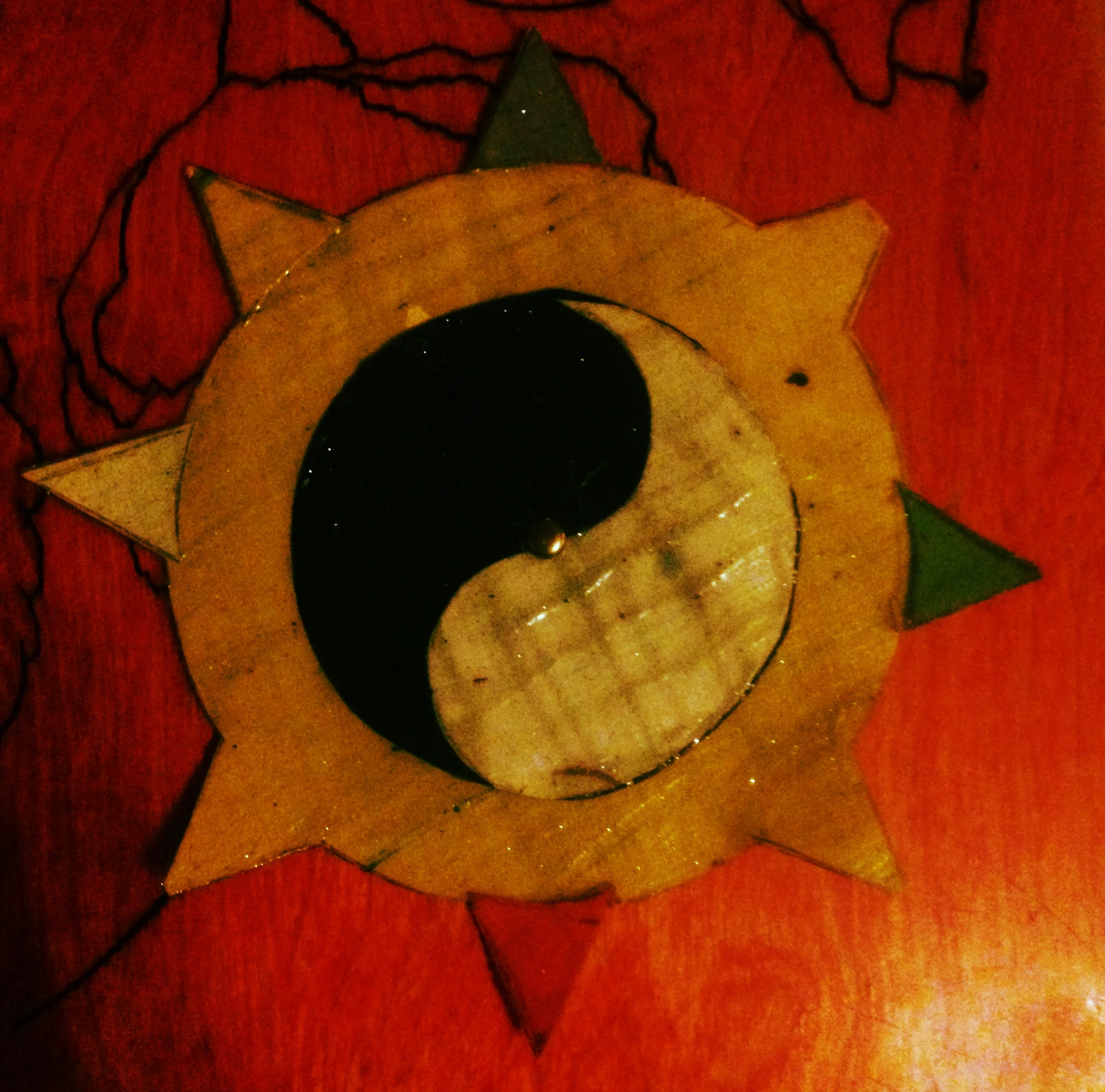
A chart showing the quarters and cross quarters of the year with the waxing and waning of night and day. Chart and photo by author.

A chart showing the quarters and cross quarters of the year with the waxing and waning of night and day. Chart and photo by author.

Equator – to make equal

Equinox – equal night

Because of this, some thinkers got together, as the story goes, and invented an artificial time change, known as “daylight savings time,” to our already artificial time. Like leap year, the concept of daylight savings time arbitrarily changes our collective clocks an hour forward in the spring and an hour back in the fall.

Our bodies are not designed to make this “leap” forward or back. We are organic beings living in an organic world. We are a part of the natural organism we call Earth. When we artificially augment our rhythms to meet societal demands, we suffer.

This time change is a bit like a whiplash on the body’s sleeping and waking cycles. More so, it is like jet lag. Jet lag, long believed to be more psychosomatic than an actual condition - is now accepted in the medical and scientific communities as an actual condition caused by disrupting the natural circadian rhythms. Hence, its official name is “desynchronosis.”

“De” means the removal of. “Syn” is with or together... and “chronos” is time. Desynchronosis - to be [taken] out of sync with time.

Though one could argue that the propulsion of our bodies across great distances, at extreme speeds, and through the air - might leave the body feeling “some type of way.” We can show through measurements of body temperature, plasma levels, [midichlorians?] and hormone secretions - that rapidly changing time zones introduce new algorithms for our bodies to adjust to.

I experience a time change just like that. While some people report enjoying the autumnal change and suffering the spring, I have seen the adverse effects on our collective health in both directions. It is disconcerting, to say the least, to suddenly wake and it’s dark outside when days prior it was not that way. I believe we will soon have to speak of “time change lag” or induct its effects into the pathology of desynchronosis. Or perhaps the rumors are true, and we will dissolve time change once and for all…

Image credit Mantak Chia


Our bodies are governed by the cycles of the sun. The Sun tells us when to wake and when to go to bed. In ancient times, the sun was worshiped as the great giver of life, for this very reason. In the spring, we see the sun growing brighter and brighter. The days begin to wax, to grow longer and fuller. Even in a very long, harsh and cold winter by the spring equinox people are so reassured, convinced of the sun's return it is not uncommon to hear the phrase, "He is risen!"

But we are not yet there. Not now, not today. We are in the darkest of days, the longest of nights.

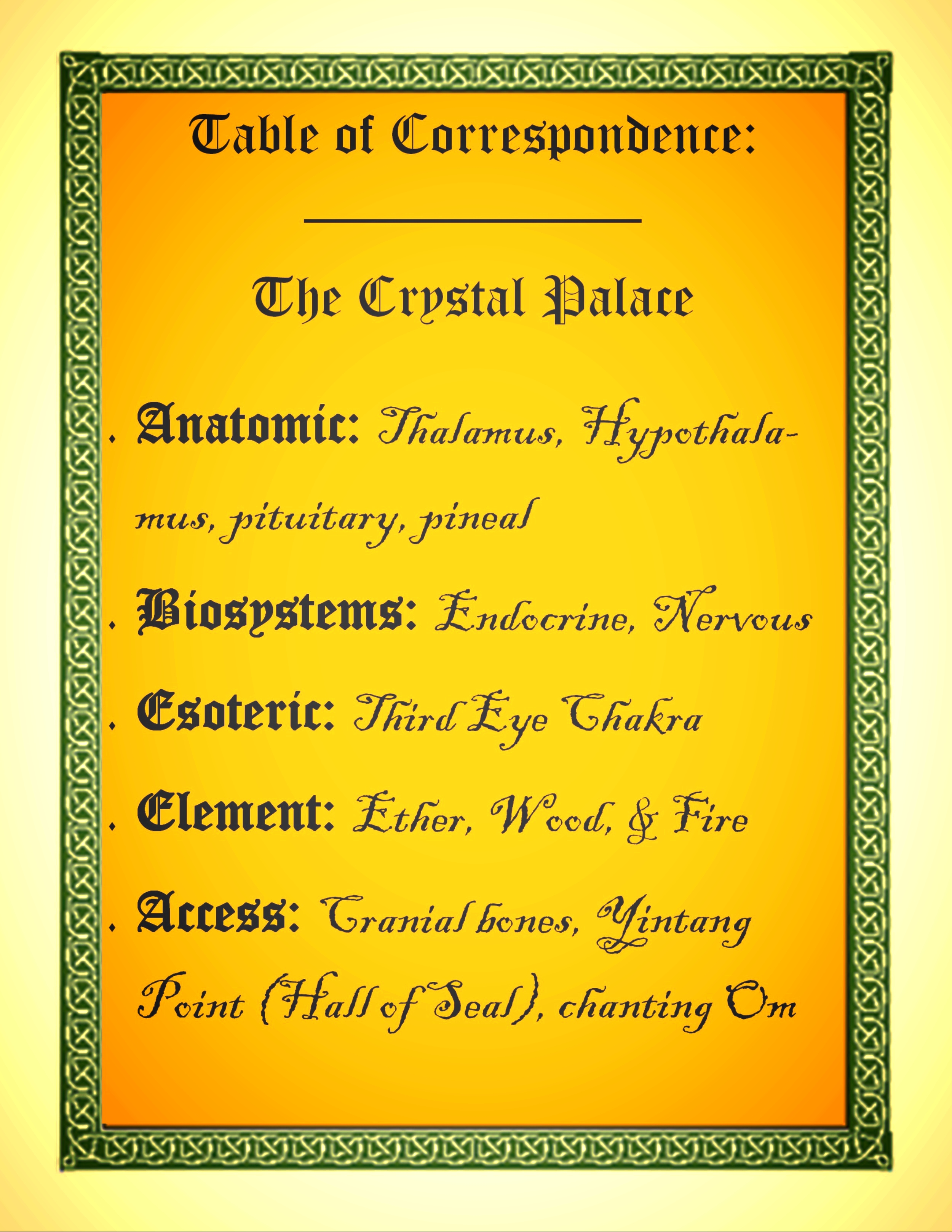
Behind your eyes, inside your brain lies a sacred place known to the Taoists as the Crystal Palace. This “palace” is both metaphysical and also quite anatomical. In anatomy, this section is divided up into the thalamus, the hypothalamus, pituitary, and pineal glands. Collectively, they control the body’s clock, our reproductive cycles, pregnancy, birthing and breastfeeding, orgasm, trust, and they have a great deal to do with consciousness itself!

Most of this Crystal Palace is a part of the endocrine system, the hormone producing system in our bodies. Hormones control everything! They are the biochemical signals for everything from growth and development, puberty, ovulation and menstruation, digestion, sleeping and waking cycles… like everything! Hormones control us from fetus to crone!

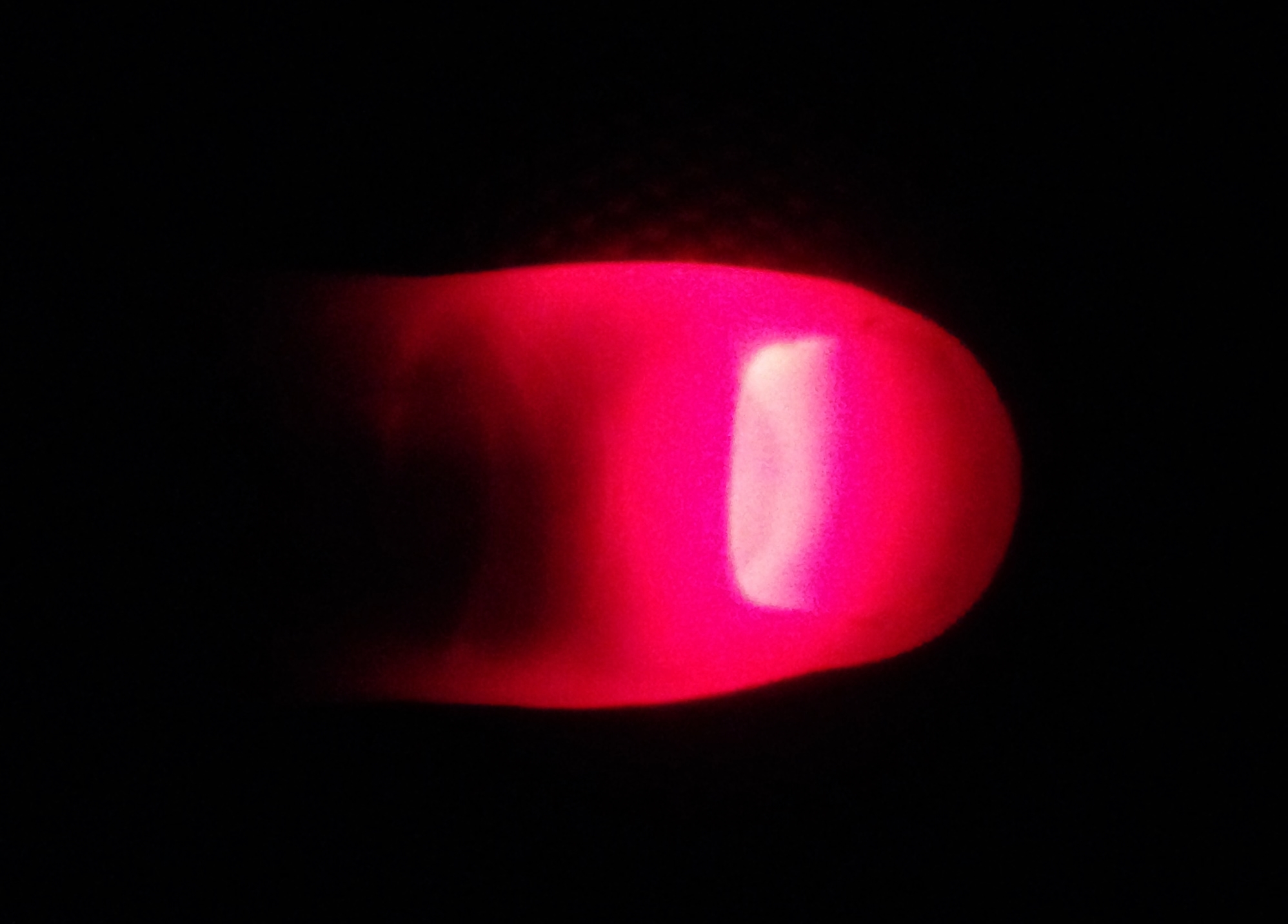
Photo of LED light from phone penetrating through thumb. Photo and thumb by author.

Photo of LED light from phone penetrating through thumb. Photo and thumb by author.

Do you remember your first solar powered calculator? As a young child, I was fascinated with the idea that the sun could power my calculator. Okay, I’ll admit, I still am! Well, we are solar powered people! The sun is the “great-great master gland” of our endocrine system. It produces the hormone, “solar energy” which sets up our clock… much like this laptop, I am typing on is synced to some clock somewhere in the ethers… We link up to the sun for our internal clock.

The sun’s rays reach our Crystal Palace by two routes. One route is through penetration of our flesh and bone. To check a fertilized chicken egg for fetal development, there is an age-old process of shining light through the egg in a dark place to see what structures have developed. This process is called candling, as it is far older than flashlights.


If we could candle our own bodies, what would we see? How far does light penetrate into our body? Do this… hold up a flashlight to your hand… turn out all the lights and see how the light penetrates through skin, fascia, muscle, bone, back through the fascia, and then skin. The light has changed color, but it makes it through! The sun is a very powerful light, and it penetrates through our bodies and into our Crystal Palace.I think of various religious practices involving head coverings, head shaving, growing the hair out, etc. Are these attempts to block, filter, or capture etheric energies in route to the Crystal Palace? Does shaving one's head allow for more light penetration? Does growing one's hair act as an antenna for esoteric energies? Does a headdress, cap, or other device act as a filter in some way?

Light is carried throughout the body via fascial and nerve tracts. One specialized optical-tract light-pathway is known as, "the retinohypothalamic tract." This organic fiber optic cable carries light from the retina into the Crystal Palace. This tract is a more direct route.

There must be a reason that the ancients would do morning rituals and exercises, such as yoga and chi gong, facing east. That reason is simple… to link up to the sun! Our system must be constantly connected to the great-great grand master to be in balance.

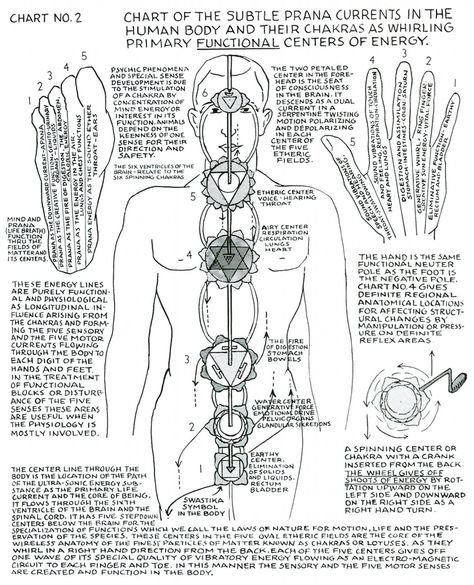
Furthermore, this area has the esoteric significance of being known as, “The Third Eye Chakra.” This chakra is associated with being able to see through the veil, into the spirit world, psychic vision, etc. For that reason, many attempts have been made to “open” the third eye. If you were ever a fan of the band, Tool (or if you have ever been subjected to a fan of that band), you might have heard the lyrics, “prying open my third eye.” Prying a chakra open, is not a recommended path.

Instead, I would try being in balance with the natural rhythm of things. Taking care of your body and eating healthy food. Listen to your body, to your environment, the seasons, and the sun.

Currently, as we experience this Winter Solstice, the sun is being reborn. The night is at its longest and day is at its shortest. If you were able to decipher the messages from the sun to your circadian rhythm, what might it say?


THE PHYSICAL REALM WHERE WE FIND SPIRIT: a detailed exploration into fascial and energetic theory -- prelude

For the bodyworker, there seems to be this fork in the road. If we turn down the road leading to the West, we find ourselves in a place known as “clinical” and “scientific.” Whereas if we choose to turn to the East, we find ourselves in places known as “energetic” and “spiritual.”

We set up camp, defend our ideology, and find identity along these roads. Those who followed the road east may find allies who find clinical work to be too sterile, academic, and even uninspiring [lacking spirit].

Those who turn to the West find themselves influenced by like-minded individuals who find Eastern philosophies to be whimsical, outdated, archaic, and simplistic.

Yet there are some of us, who find that there is no fork [in the road]! Both paths are not only valuable but complementary. The paths are merely an illusion, a fragmentation, and therefore separating a greater reality into the illusions of clinical vs energetic.

Luckily, I have had the fortune to have teachers who thought that there might be a bridge between these two ways of seeing the world. They inspired me to look for connections between the physical and esoteric.

A seemingly troublesome question to some is this, “where is the human energetic system located in the physical body.” The simplest answer is that it is found everywhere and throughout the body. However, the unintended abstraction within this statement leaves the Western Bio-scientifically minded perplexed. The idea that it is “everywhere” is polarizing. It tells the energetically minded that they need seek no further and the clinically minded, that they haven’t. “Everywhere” is so many things that it can’t possibly be “everywhere.” By including every organ, tissue, and cell in the human body, being all inclusive, I suppose, it leaves very little to go on.

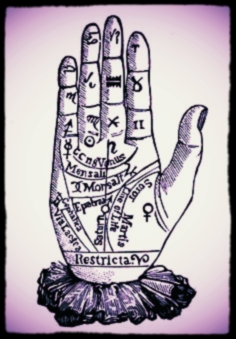
My first exposure to the energetic realm was, as a child, growing up with a witchy sibling. My first influence into the idea that points on the body that affected other areas of the self, was admittedly, the divination art of palmistry. Later on, though not much, I had a bandmate who was into the occult, raised into a Wiccan family. Again, this idea of an energetic body having some significance was intertwined with fortune telling and a conceptual framework that the universe was held together by some divine force.

I was both interested and skeptical of these ideas… and it wasn’t until a study abroad trip to west coast Africa that I had my first glimpse of this having a... well... a therapeutic value. My drum teacher, Raphael, was the village healer. He worked with only a handful of herbs. However, had a magick about him and his work. I wouldn’t understand, until years later, that the man who sent me only my quest to become a “healer” was what we might refer to as a “shaman.”

To be clear, Raphael taught me the “kee-dee drum, ” and that is all. He didn’t teach me a single herb or healing method, at least not in ordinary waking consciousness. However, he did convince me that I was to follow a healing path.

When I got back to the states, I searched for courses in the healing arts – any healing art would do. Just “a foot in the door” was my short-term goal. My first class on the topic of healing that I ran across was a course in a Japanese healing method known as, Reiki. Reiki is very popular among the new age crowd as well as bodyworkers. You’d be hard pressed to find a massage therapist who hadn’t at least heard of Reiki, taken a course in the subject, or many have been declared a “Reiki Master.”

The teacher I found, was kind of an anomaly, or so I thought. He was a Kenpo Karate teacher who taught a rather aggressive fighting style with multiple chances to kill one’s opponent in each sequence. However, he was also, a healer. He had studied a multitude of healing arts and was considered a “Reiki Master.”

Reiki was fascinating to me. It opened my mind to a therapeutic aspect of those otherwise bizarre and spiritual fringe ideas that I had heard about. Auras were things which could be healed. Chakras could be balanced. And yes, there were even energy points that had significance for healing. And truly, I had some very “spiritual” experiences in class and working with energy.

However, after a time, I found myself disappointed. Don’t get me wrong, I had some very interesting, transcendental, psychedelic and even shamanic experiences. However, having trained with and practiced with many Reiki practitioners and so-called masters, I found that there was a lot of information that just couldn’t be substantiated with… well… anything! Furthermore, no one seemed to have even a basic grasp on physical human anatomy, physiology or pathology.

errectors.jpg

So, I went to massage school. In massage school, I learned a whole lot about the physical human body. I also learned quite a bit which had been absent from my energetic training. I was taking classes in polarity therapy, Ayurvedic treatments, reflexology, and yes, even more reiki. But in addition, I was learning about deep tissue modalities including myofascial release and trigger point therapy. Most people in my position would get a smattering of introductory courses spread out over a long period of time. I, however, took this opportunity to study everything with everyone at the same time. I was taking basic courses by day and advanced clinical courses at night. On the weekends I was in energetic workshops – truly immersed in this new world.

I began to notice this dichotomy. The people who thought that energetics were foolish and the people who thought clinical understanding was... well… missing the spiritual "root" to the illness. Luckily, I had a few energetics teachers who were totally into the clinical and clinical teachers who found energetics as fascinating as I did. Then it happened!

My basic massage teacher was talking about fascia… and within a week my shiatsu teacher was also talking about fascia. Somehow both these teachers, from far ends of the spectrum, where both interested in connective tissue, for completely different reasons. Soon after, my clinical massage instructor was talking about, well, you guessed it, fascia!

Within a few weeks, I came to a deeper understanding of this stuff. Connective tissue holds [bad] posture, holds [repressed] tissue memories and may be the place where the acupressure channels reside!

That was in 2001. Over the years that have followed, I have ebbed and flowed back and forth from more energetic times and more clinical times. All the while, I have been studying, correlating, and connecting concepts, teachings, modalities and traditions finding deep correlations between traditional and modern healing methods and various world views of the human body. The bridge that I have observed between those energetic ideas and those biomedical constructs isn’t just within the fascia [though that’s true also] it is the fascia itself!

Over this series, I would like to take you on a journey into, throughout, and all about the fascia.

Stay tuned!

The Spirit Haus

Tree trunk resembling a paracardium. Photo by the Author.

Tree trunk resembling a pericardium. Photo by the Author.

The pericardium, often referred to as the fluid-filled "sack" where the heart resides, is actually an awesome connective tissue (or fascia) which has many amazing qualities. One interesting thing about this so-called sack is that it seems to arise from the diaphragm. The two are inseparable in the absence of a scalpel or butcher knife.

When your diaphragm contracts (for in-breathing) the pericardium is pulled downward, massaging the heart. As the abdominal muscles contract, they push the guts in and upward, the ribcage is pulled inward by a series of muscles I call the "in breathers" and the pericardium is squeezed between the lungs (which it is also interconnected with).  Thus, out-breathing is the return [massage] stroke.

So if the pericardium can be seen as arising from the diaphragm perhaps the lungs are arising from that. A good image for this new pericardial paradigm is the image of a fascial butterfly.  Imagine a butterfly, upside down, so that the head is bellow the body. The forewings of the butterfly form the form the diaphragm, the hindwings pleura (fascia) of the lungs,  and the thorax of the butterfly becomes the pericardium.

Pericardium "glued down" to the diaphragm. Image from Gray's Anatomy, public domain.

The lungs oxygenate! They in-spire! The lungs connect us to the earth by way of trees. In fact, inside the lungs, we can see a microcosmic reflection of trees. We even use tree terminology to describe the lungs, like bronchi (branch) and bronchioles (little branches or twigs). Do you remember from grade school that lungs breathe in what trees breathe out; we breathe out what they breathe in? I have reflected on this throughout my life.

The heart thinks! It works together with the lungs to circulate nutrients and discharge toxic gases while the nervous system and fascia produce and distribute electricity. Imagine this complex structure glowing in the dark… a lighted butterfly-shaped vortex in the central core of our being.

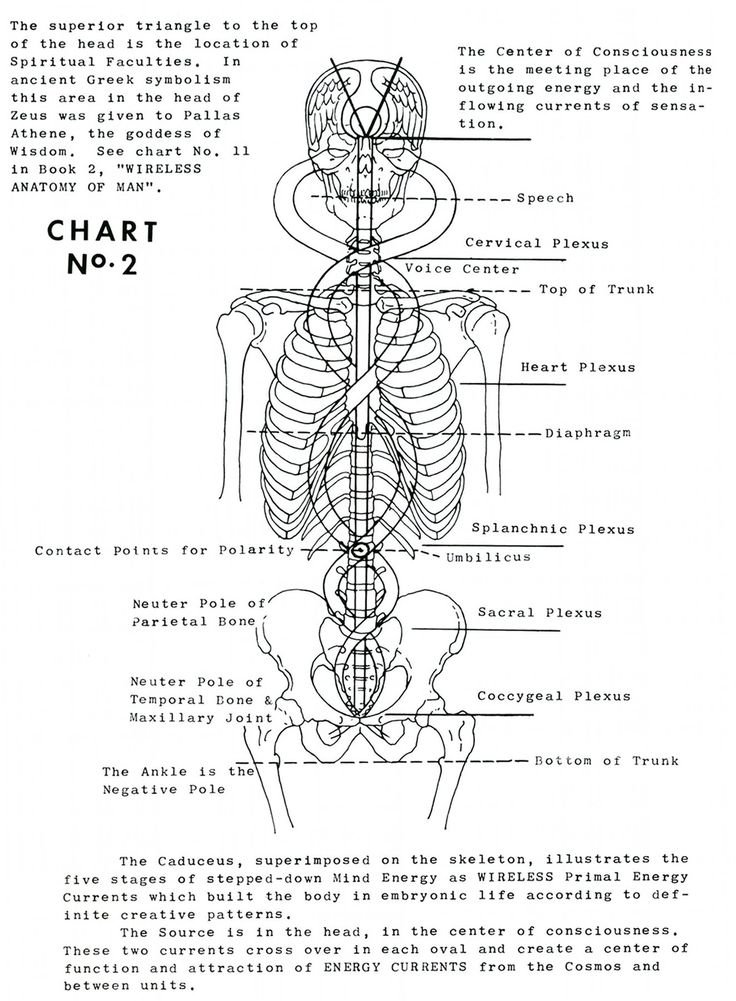
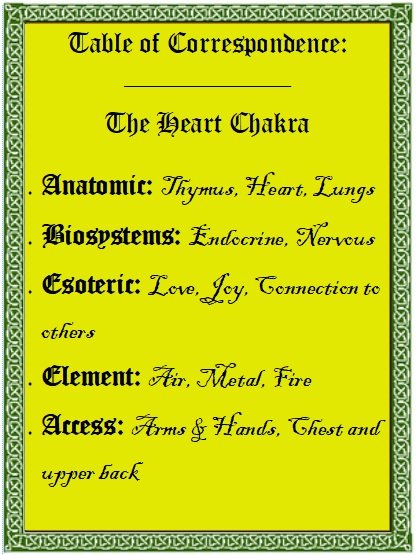
This energy epicenter is home to such things as the heart chakra (the metaphysical sphere where our ability to love originates), the thymus gland (the master gland of the immune system), the Wei Chi (the energetic defense shield), and the Shen, you know, the Spirit!

Upside down butterfly. Showing "doctrine of signatures" to the daphragm, paracardium, lungs. Image altured by the author.

Spirit, soul, and psyche are intertwined words throughout cultures and histories. They are not the same. They are the same. Sometimes having separate meanings and other times not. The Spirit is the seat of emotions. It is consciousness. When it is gone, "you" are gone. Though Spirit is not the same as the soul. There are connections between the two. I think it is easier to think of it in this way: the soul is the everlasting bit of the human that resides somewhere in the Ethers. The soul is the subject of religion. The Spirit is the place where the heavens and earth come together. It is much like our concept of the mind. In fact, the mind has a lot of correlations to the pericardium. The word for taking a breath is "inspiration." In-spirit-ation. "Ation" means action, "in" is the direction it is going, and spirit… "spirit" means… spirit. So, we are taking "spirit" into our lungs. And when you exhale, what are we doing? Spirit also speaks to a gracious quality. Thus, the connection between our out-breathing (taking away) and the spirit. It is etheric, mysterious, mystical. When we are full of spirit, we are said to be "inspired."

One of my favorite questions to ponder is, "where is my mind?" Culturally, people point to different areas of their body when speaking of the mind. Some point to the head, behind the eyes. Is that the place you thought of? Others point to their hearts. Strangely enough, no one points to other random parts of their bodies. No one points to their thighs, for example.

The heart contains tiny nerve structures known as sensory neurites. There are 40,000 of these bad boys! What makes them so cool? They are so similar to the nerve structures in the brain that some call them "the little brain in the heart." As you know, brains think. So, hearts think… right?

Cross-culturally, there is a connection with consciousness and emotions (Spirit) and the heart.  The Spirit might best be seen as a "psycho-soma" or mind-body [complex] where you can honor the instinct and emotion that seems to come throughout the body, as well as the obvious central nervous system processor we call the brain.

This pericardium would be electric and hormonal.

It would include the heart and lungs; diaphragm; the heart and solar plexus chakras; and it bridges the elements of air/metal and fire. It has relationships with the respiratory, circulatory, endocrine, and energetic systems. While I am out on a (figurative) limb pontificating as I am about the various relations of this energetic pericardium, let us not forget the close proximity (and fascial connection) to the thymus gland, the master gland of the immune system.

The Spirit is said to live in the heart, and the heart lives in the pericardium!

To be continued...