Tom Just Wanted a Coffee!

• A man in his early 30s touches his feet for the first time in years.

• A teenage girl, pretty intense toe-walking, was having trouble getting up and down stairs.

• A martial artist in her 50s leveled her “anterior pelvic tilt” after 20 years—just by getting her heels on the ground.

• A woman in her 60s had a duck walk, and one of her heels just couldn’t touch the ground. She cried when she felt the floor under her feet for the first time in ages.


Posture starts with the feet. It doesn't matter if the issue is head forward posture, a hunched back, a curved spine, or a tilted hip—it starts with the lower extremity, and quite often, at the foot itself.

Think of muscles like pistons. They are designed to move independently up and down in their tubes (fascial sleeves). However, over time, they get sort of glued together—or gummed up. In the case of the foot, there is a group of muscles in the lower leg we call Tom, Dick, and Harry (Tibialis Posterior, Flexor Digitorum Longus, and Flexor Hallucis Longus). They live in the deep posterior compartment of the calf—tucked away underneath the more prominent calf muscles.
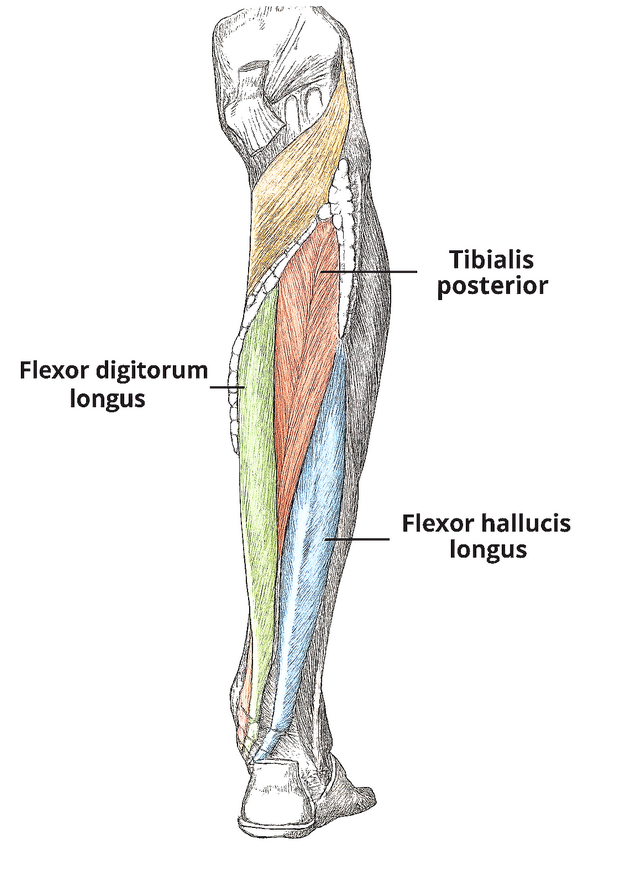
Over years of abuse (life in the modern world—sedentary lifestyle, wearing bad shoes, walking on hard surfaces), they begin to stick to the muscles on top of them (the superficial ones). When this happens, both layers are restricted. They have to negotiate movement together.

It’s sort of like hanging out with a group of friends, but each of you is trying to go about the day as you would solo—and everyone has different ways of doing things. It just doesn’t work.

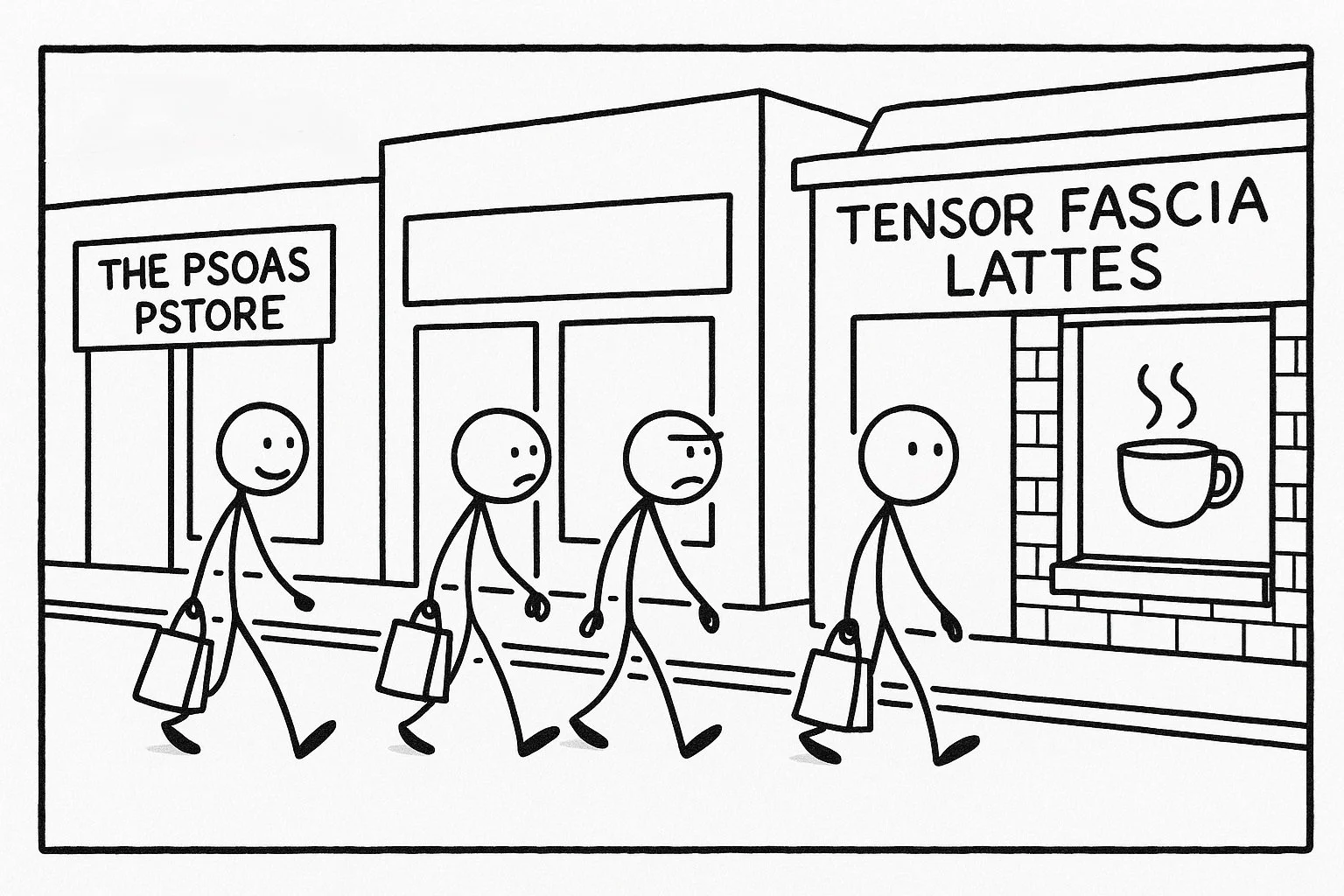
Sam (Soleus) agrees that she definitely wants to grab that mocha in a bit… but she keeps leading you to shop after shop, stop after stop. The group is moving slowly—nowhere—when the coffeehouse is right there. It’s right there, Sam! Then there’s the rest of the pack, who can’t make a decision to save their lives. Maybe they just don’t want to offend anyone, by communicating their actual wants or needs, so they leave the decision up to the group. You know… an informal democracy that doesn’t really get anything done.

And you, you’re Tom, in this analogy by the way, and all you wanted was to get your mocha… you’re fine loitering, lollygagging, or even moving at a snail’s pace… your also okay with plodding, creeping about, and lurking. You’d be perfectly content dragging feet, hobbling, and limping along. To be absolutely clear, you, my friend, you are completely fine taking yours and everyone else’s sweet time – as long as you can at least start your freakin’ journey, like a normal freakin’ human being (or muscle) with some freakin’ caffeine!

But no. This group of indecisive people (glued-together muscles) can’t seem to move in any orderly fashion. They just sort of meander, directionless, as a pack—like that entire family of six who decided to shop together, on a flippin’ Sunday, in the tiny aisles of Trader Joe’s last week. You know who you are!

Now where was I? Oh yes, “Tom” was trying to get a mocha (pull up on the arch), but Tom and Dick are glued (have formed adhesions) to Sam. Tom made the mistake of carpooling… he will not make that mistake again. Sam is currently deep in conversation with Nicole (adhered to Gastrocnemius), preventing Tom from getting his caffeine fix. And Nicole is way more interested in window shopping (flexing the knee joint) at the moment—and oblivious to the effect she’s having on the group dynamic (pulling up on the heel, preventing it from touching the ground). So Gastrocnemius is pulling up on the heel, and Soleus too, by default. At the same time, Tom and Harry are trying to get a mocha (pull up on the arch).

Meanwhile, Tabitha, Tom’s sister (Tibialis Anterior), is working on her master’s thesis while sucking down a tremendous amount of espresso at the very coffee shop he’s been trying to get to all morning (also pulling up on the arch—but from the opposite side). Without her brother there, she might consume too much coffee and get super cracked out (lift up on the outer arch further collapsing the inner). Tom should have taken his sister’s offer and studied together… why Tom, why?!

Meanwhile, Dick is also just trying to get to the record store (which Sam also promised to go to) for The Phalanges EP: Gripping the Floor with Our Toes. His plan all along was to grab a cold brew and then hit the record store.

What’s up with Harry in all of this? While he’s certainly interested in checking out the new record, he’s mostly along for the journey—the group hang—to provide some structure to the whole endeavor (big toe push-off and propulsion).

By the time 3:00 rolls around, the group has somehow found their way to an ice cream shop. No coffee. And now it’s too late for reasonable people to caffeinate. The entire group is tired from all the push-me-pull-you of the endeavor. They cave. They overindulge. [The end.]

What I’ve just described is a very common phenomenon: Muscles, ligaments, and the tiny bones of the ankle and foot—each designed for highly specialized, dynamic functions—become bound together by fuzzy scar tissue.

The lower leg and foot are completely exhausted when this dynamic occurs. Muscles end up performing tasks they aren’t meant to—some in an effort to support those that can’t function properly, others simply because they’re stuck going along for the ride.
Headaches: They're a Pain in the Neck!

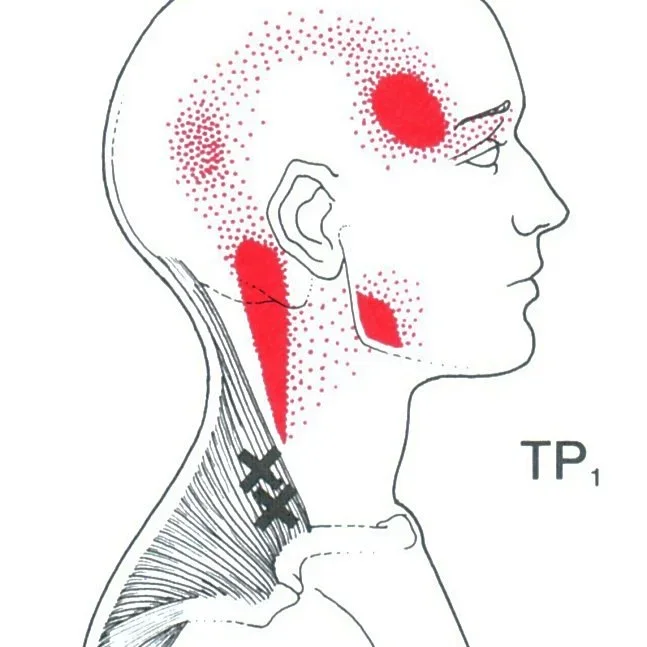
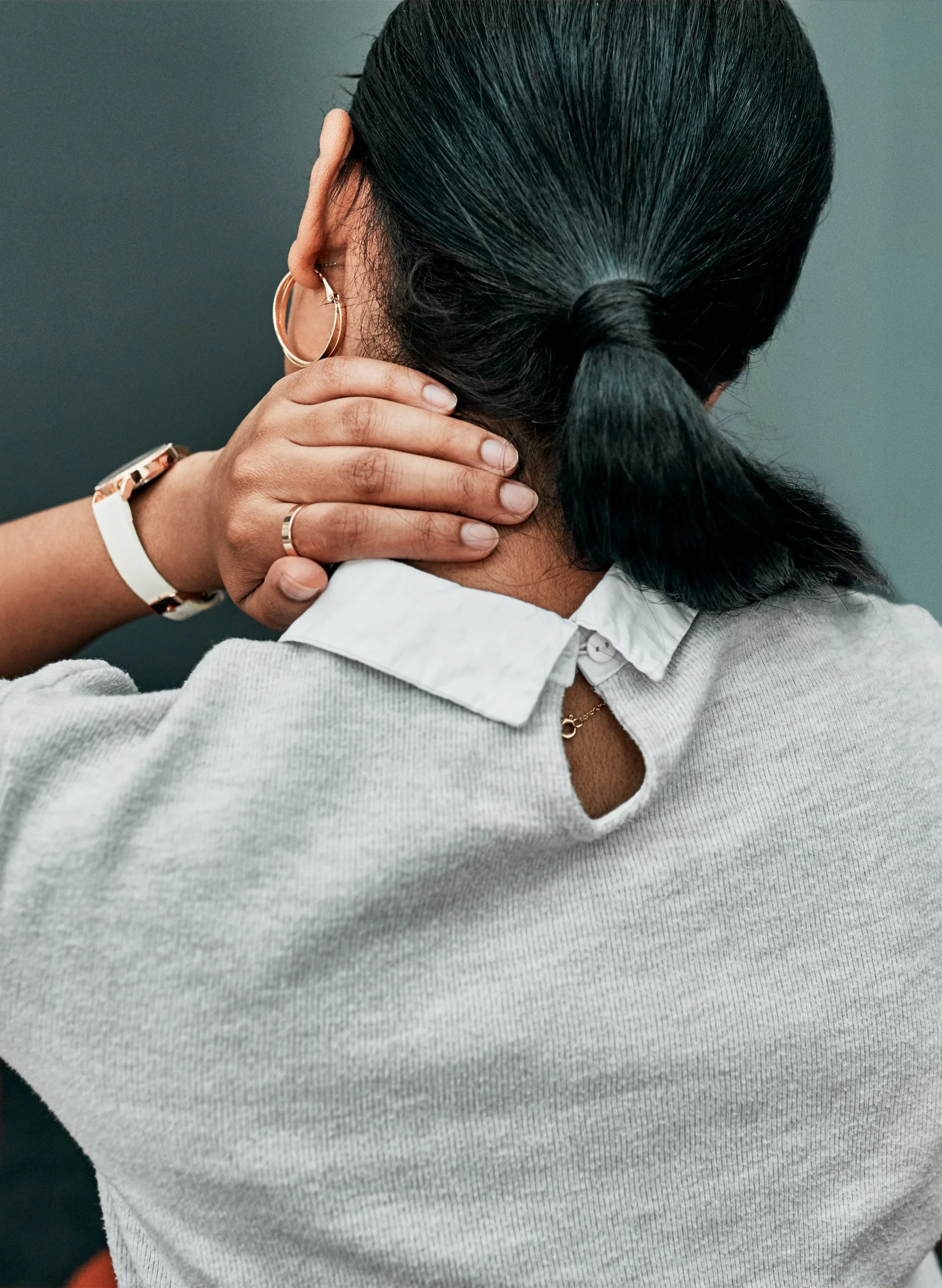
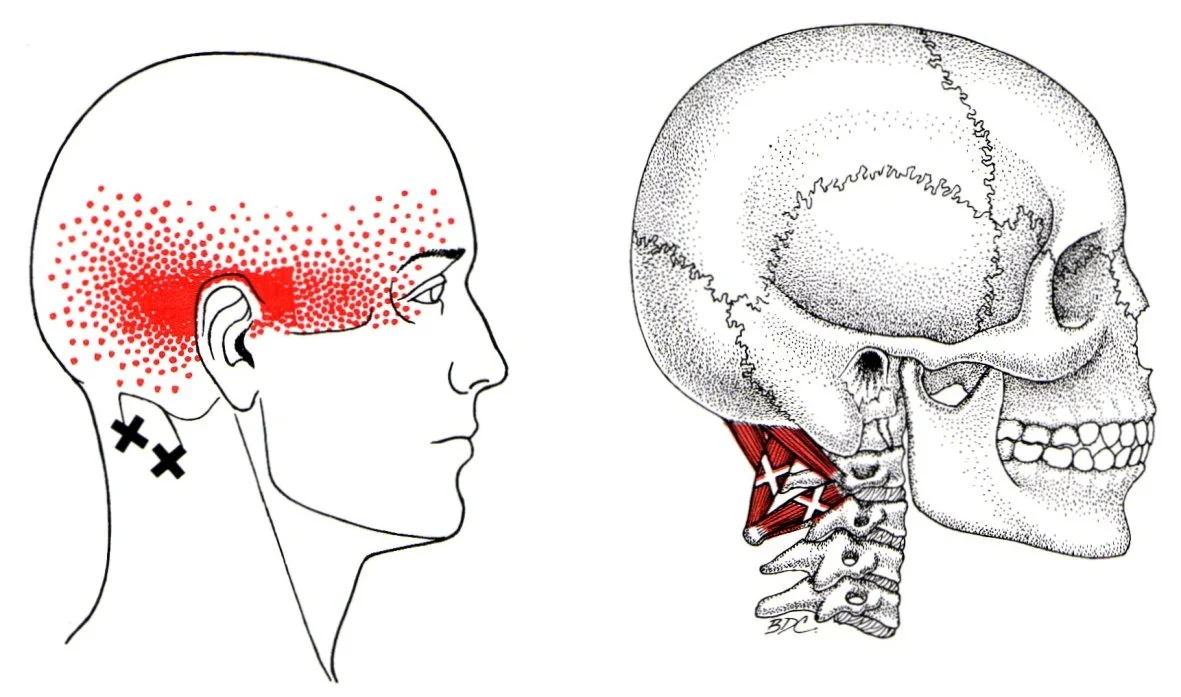
No, that’s not a typo—it’s a play on words because your headache might actually be coming from your neck! While it may feel like your head is the problem, research suggests that about 80% of headaches are actually caused by tension in the muscles at the back of your neck (Travell & Simons, 1999).

Trigger Points: What Are They?

You’ve probably heard the term "trigger points" and wondered what it means. Maybe you thought it was the same as knots or pressure points—and you wouldn’t be far off. A trigger point is a hypersensitive nodule found within a tight, hypertonic band of muscle. These nodules often form in muscles that are injured or dysfunctional. Imagine a small area of muscle that’s much tighter than the rest, and within that tight spot, there’s a part that’s really irritated. When you press on it, it’s painful, and that pain can even be felt in other areas—this is known as referred pain.

The Mystery of Pain Referral

One of the most intriguing aspects of trigger points is their ability to cause pain in areas far from where the trigger point is located. The exact mechanism behind this pain referral is still not fully understood, but it appears to be related to the myofascial tissue—the connective tissue that surrounds and penetrates our muscles. This tissue seems to play a key role in how the pain travels, but the details of this process remain a topic of ongoing research.

How Massage Therapy Can Help

Massage therapy should be known for its effectiveness in treating headaches. Unfortunately, many of us only get a brief introduction to headache treatment in massage school—if at all. I was lucky. During my advanced training, my teacher mentioned that many headaches, including migraines, originate from tension in the back of the neck. As a migraine sufferer myself, I was intrigued. Could there really be a treatment that didn’t involve taking pills?

So, I asked my teacher if he’d work with me as a client, even though I was also his student. He agreed, and we set up an appointment. He worked on the back of my neck for about 45 minutes to an hour. We repeated the treatment the following week and kept it up consistently for a few months. The results? It’s been 20 years, and I rarely get headaches. The first sign of a migraine after those treatments was 15 years later, and it was only a faint reminder of what I used to experience. I was driving home after a particularly stressful week, and I got one of those visual disturbances (often called migraine aura) that usually signaled a migraine coming. I hadn’t had one of those in over a decade! I rushed home, expecting a full-blown migraine, but it never came. Instead, I did a little work on myself, and then I sought out a therapist I had trained in this technique, got a series of treatments, and found staved off the migraine gremlins for another time!

When I find something that works, I dive in deep. Back in that advanced training, I studied my teacher’s headache protocol inside and out. I studied it with him, I read about these pain patterns in thick medical texts, practiced the protocols, and received them myself. I immersed myself in it, just like I have with many of the other treatment plans that seemed substantive. And you know what? It works!

I’ve used this method to help thousands of people with chronic and debilitating headaches. No matter what type—temporal, occipital, migraine, or tension—they’re all treatable with Clinical Deep Tissue: Pain Management Bodywork!


Low-Back-Butt Complex: the postural pattern

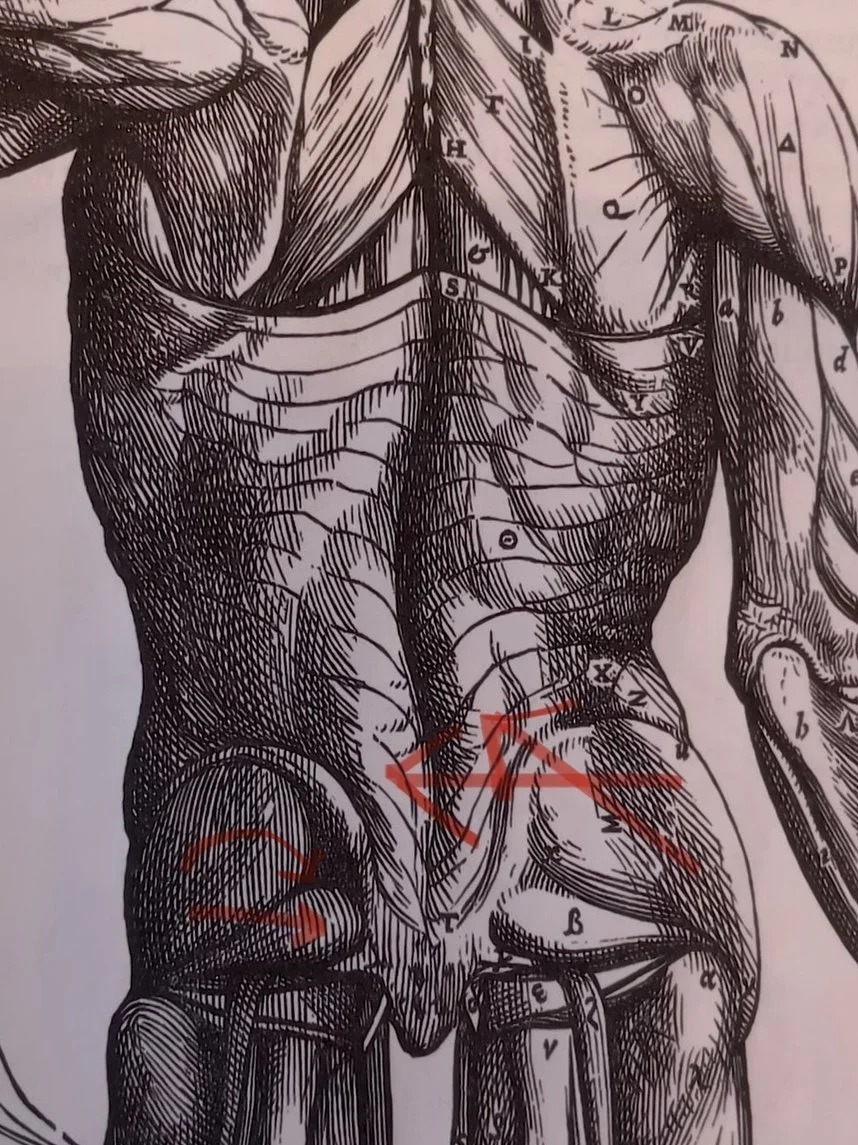
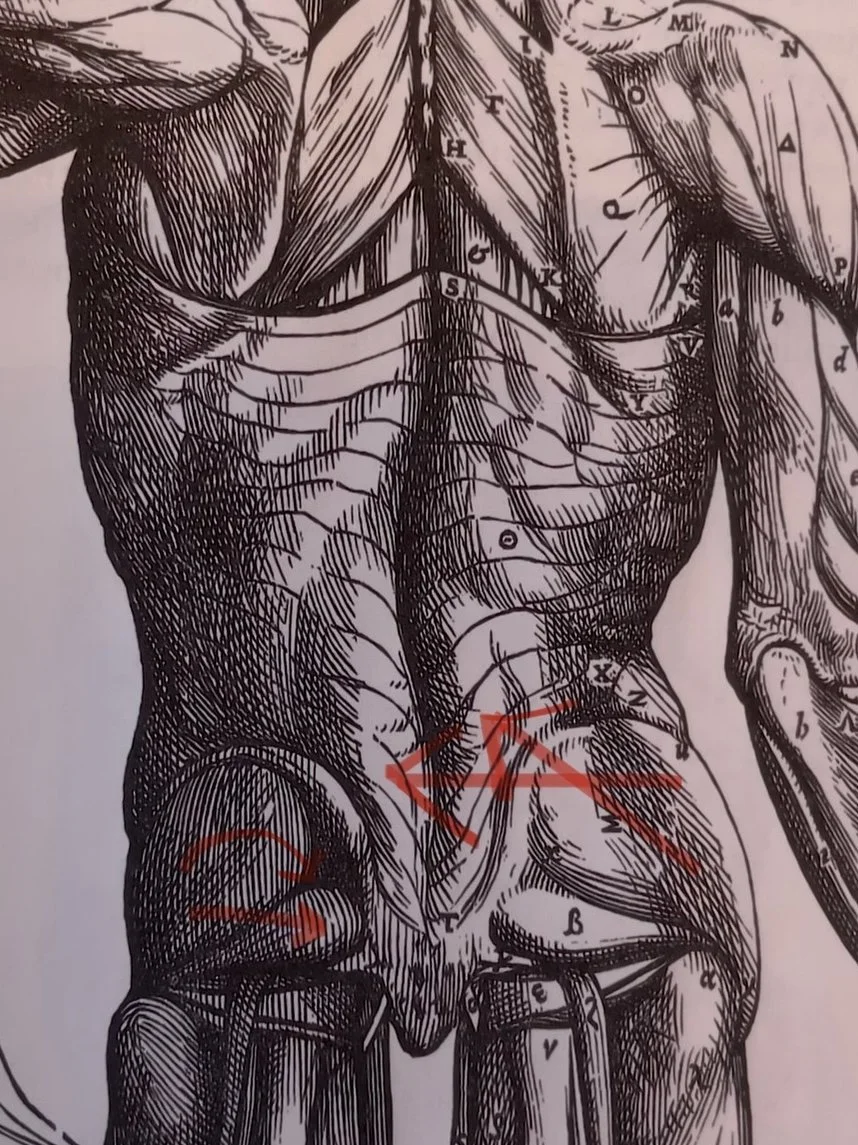
In a previous post, we explored a common phenomenon in my practice: the intricate interplay between lower back and hip muscles, establishing a feedback loop that transmits pain signals, resulting in guarding, tension, and eventual dysfunction.

The previous article delved into trigger point theory, elucidating how pain referral patterns create secondary pain patterns. However, it overlooked the crucial postural considerations contributing to the initial problems.

As a pain management bodyworker, my primary objective is promptly alleviating the client's discomfort. Like many practitioners, I grapple with whether to address the cause or the symptom—an age-old question that has sparked debates throughout the history of medicine.

My approach is straightforward: identifying the cause is akin to peeling away layers of an onion. Begin with the basics—the most pronounced issue the client presents. Then, gradually, unravel the mystery behind the problem over time.

In the case of the low-back-butt complex, I understand that hip muscles can refer pain to the lower back, often on the opposite side. If this pain referral pattern persists, it creates secondary trigger points, reciprocally referring pain to hip muscles on the same side. Ergo, my initial goal is to create a treatment plan addressing where the client feels the pain and where the pain likely originates.

After a few sessions with promising results, the focus shifts to understanding the how and why. Often, the answer lies in posture, gait, and body mechanics—how the individual stands, sits, or engages in specific activities of daily living. While I pose many questions, I don't expect immediate answers. Instead, I aim to plant seeds, encouraging clients to embark on fact-finding missions about their daily lives and body habits contributing to the issue.

Now, let's delve into the low-back-butt complex and its manifestations. Often, the key players here are the gluteus medius and minimus muscles. The differential diagnosis involves considering whether the individual spends prolonged periods of sitting or standing, engaging in activities like driving or working at a computer.

When seated, these muscles shorten from two angles of the hip joint —flexion and abduction. Individuals who drive long distances often exhibit both, spreading their legs and maintaining a flexed position. Over time, this conditions the gluteus medius and minimus to become shorter, creating a pull on the pelvis in a standing posture. If these muscles are shorter than they should be, it can result in an anterior tilt of the pelvis.

Also noteworthy is that an anteriorly tilted pelvis creates a more significant lordotic curve in the lower back. This lordotic curvature, in turn, shortens the lower back muscles (e.g., erector spinae lumborum), further contributing to an anteriorly tilted pelvis. Another feedback loop, if you will.

Visualize an anteriorly tilted pelvis as a bowl of water stacked on your thigh bones. If the water is pouring out from the front, that's an anterior tilt. This is, of course, but one way to create an anteriorly tilted pelvis.

When I first started out in this field, my practice was in Dallas, Texas. And, boy howdy, did I see some anterior tilt! This was often caused by high heels. Y'all, it was big hair and high heels! Yes, high-heeled shoes were so popular in the late '90s and early 2000s that my practice saw more low-back-butt complex cases than you could shake a stick at!

Some muscles become locked short, and their antagonists will likely be stuck in an overstretched position. For an anterior tilt to the hip, this might involve the hamstrings, some of the groin muscles (those toward the back of the leg), and in the front, the abdominals. Any one or all of them might be "locked long" and need support to restore balance.

In terms of the low-back-butt complex, this manifests as a pain feedback loop pattern. If muscles are locked short, they tend to create contraction knots known as trigger points. These muscles feel tight, like firm clay that has not yet been kneaded. The locked long muscles feel ropey with taut bands within them. Surprisingly, overstretched muscles also have contraction knots because the constantly overstretched muscle is hanging on for dear life, trying not to tear. So, both groups of muscles have the potential to create pain. Therefore, either group is a potential gateway for the low-back-butt pain pattern.

So, we need to shorten the long ones and lengthen the short ones. Neither of these things happens quickly. It is a series of treatment sessions. But over time, we can get those shorter muscles to lengthen, and we can encourage those longer muscles to shorten.

In summary, the low back butt complex is often related to an anterior tilt of the pelvis. In my approach, the first step in treatment should be to address the client's pain. Once we are sure we are adequately addressing this pain, we need to explore what is causing the anterior tilt.